State-owned telecom found with banned Nvidia AI chips
Security researchers detected 32 prohibited Blackwell Ultra processors in a Chinese data center, prompting Nvidia to dismiss the incident as minor.
By Brianna Jackson ·
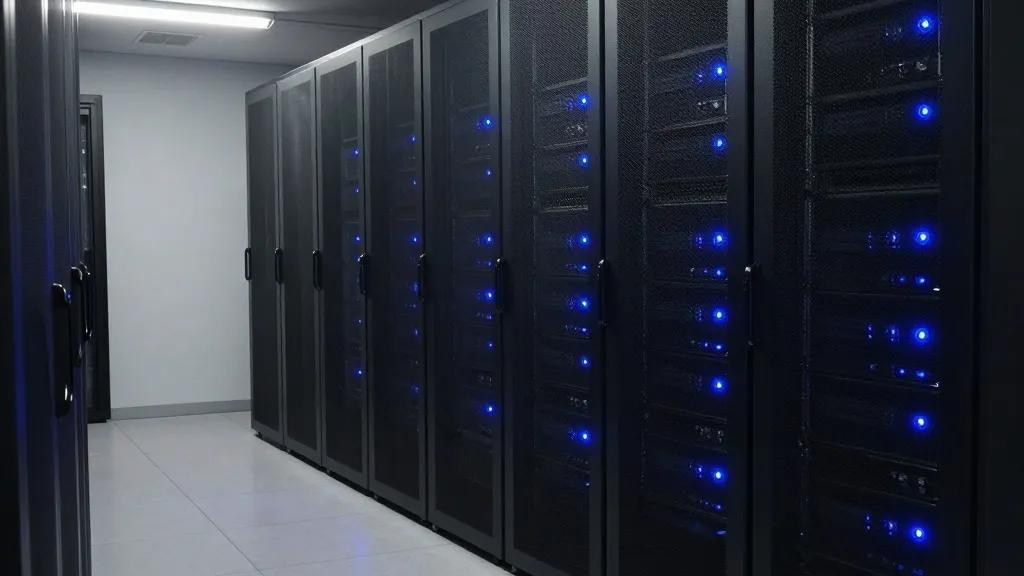
Israeli security firm Lava has reported the identification of 32 Nvidia Blackwell Ultra B300 graphics processing units within the infrastructure of China Telecom. The state-owned telecommunications provider operates a significant portion of China's domestic communication services. The presence of these specific chips is notable because U.S. export controls have explicitly barred their sale to Chinese entities.
The discovery raises questions about how the hardware entered the country, given that such chips are typically restricted to whitelisted buyers who agree not to sell them to sanctioned parties. While previous reports indicated that Chinese firms smuggled approximately $1 billion worth of Nvidia AI chips into the nation over a three-month period in 2025, the current finding suggests the flow of controlled technology continues. At that earlier time, the B200 model was the primary target, but distributors were already positioning themselves to sell the newer B300-series as it became available.
Nvidia has responded to the news by downplaying the significance of the find, although it did not deny the presence of the hardware. A company spokesperson stated that recent court cases have shown that the diversion of controlled U.S. products is less than one-half of one percent. The spokesperson described this volume as a minor fraction compared to the vast amount of domestic computing power China already possesses, noting that with tens of millions of GPUs in service in approved countries, smuggling remains a non-factor.
The method by which the chips arrived at China Telecom remains unclear, and Lava has not been able to pinpoint their exact location within the company's network. However, the researchers confirmed the hardware is present by using Nvidia's own DCGM Exporter tool. This software is designed for data center operators to monitor server health and performance. While intended for internal use, the tool is sometimes accessible from outside the data center's network and does not always require password authentication.
The Blackwell Ultra B300 is a highly sought-after component due to its advanced capabilities. Announced in March of last year, the chip offers significant performance improvements, including 50% more memory and FP4 compute capacity than the previous-generation B200. Nvidia positioned the product as being built for the age of reasoning, highlighting its suitability for sophisticated large language models. Although originally expected to ship by the end of 2025, the chip quickly became a commodity in high demand.
The illicit trade in these processors has led to legal consequences in recent months. In August of this year, nine individuals in Taiwan were indicted for illegally exporting B300 GPUs to China. This action followed an investigation by Supermicro, which confirmed it had dismissed several employees connected to smuggling. The complex logistics of the trade reportedly involved a Taiwanese server trading firm with whitelisted status.
The scarcity and high demand for Nvidia's silicon have also driven up the prices of older models. A100 servers, which are five years old, have seen their prices triple, with units now costing up to $82,000. In some cases, operators have resorted to retooling gaming GPUs to handle AI workloads to mitigate the shortage of dedicated data center chips.
Source: Tom's Hardware